Field Trips
Programs for K-12 Students
Experience the stories that make New York City iconic.
Our interactive field trips bring the city to life through dynamic exhibitions, hands-on activities, and enduring questions that inspire curiosity and connection.
Join us as we explore the places where art, innovation, and change are created and debated; the ideas that can only emerge from the unique character of New York City; and the people who shaped and dared to reimagine their city.
Damos la bienvenida a estudiantes de toda nuestra ciudad multilingüe. Ahora todos nuestros programas se ofrecen en inglés o español, o como una experiencia bilingüe. We welcome learners from across our multilingual city. Our field trips are currently offered in either English or Spanish, or as a bilingual Sp/Eng experience.
Before You Book
Before you book your field trip, we encourage you to review our FAQ. Please note:
- Group reservations are required.
- Each field trip experience can accommodate a maximum of 35 students. Multiple field trip experiences may be booked when scheduling for more than thirty-five students
- All guided field trips are priced on a fixed rate scale per guided experience. Each experience costs $175 for public and charter schools, or $250 for private and parochial schools. Field trips are free for public and charter schools in zip codes 10029, 10035, and 10037.
- There are no indoor eating facilities for groups at the Museum. Visit our FAQ for nearby options.
- If you have a question on an existing field trip reservation, learn more here.
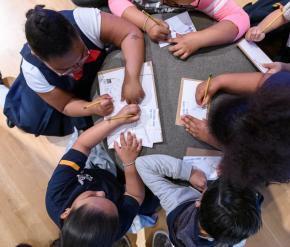
Book a Field Trip
Ready to plan your visit to the Museum? Reserve a field trip for your students through our online booking platform.
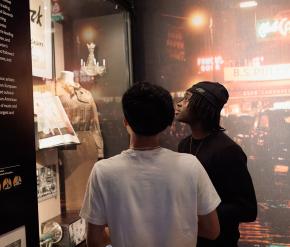
School Year Field Trips: FAQs and Pricing
Explore frequently asked questions about our field trips, or review information about booking and pricing.
Current Field Trip Offerings: 2026–27 School Year
Learn more about our field trip offerings for the 2026–27 school year below, or explore our FAQ for more information on pricing and the booking process.
Lenape Legacies and Futures
The land now known as New York City was called Lŭnaapeewáhkiing by its original inhabitants, the Lunaapeew — also known as Lenni-Lenape, Delaware, and Munsee. They are still here. How did colonization transform Lenape land use, sovereignty, and community life? How do Lenape ideas about land, nature, and governance shape daily life and community responsibility? How do the Lenape sustain their culture while responding to change? In this program, students discover contemporary Lenape voices through paintings, photographs, clothing, and interviews, practice speaking the Lenape language, and explore Lenape cultural history through artifacts. The program will close as students consider how the diversity of the Lenape experience challenges assumptions about Native nations today.
Associated exhibition: Halumii Ktapihna: Lenape Legacies and Futures
The Greatest Grid
Who should decide what our cities look like? In this program, students will explore maps and historical photographs to learn how Manhattan’s street grid system was built and how it changed over time. They then become urban planners themselves, making decisions about how a city should use its land and resources through a series of interactive activities.
Activist New York
New York has often been at the forefront of major activist movements in the United States. What tactics have New Yorkers used to address issues in their communities? Does meaningful change happen gradually or all at once? Can a movement expand its reach while still meeting the needs of its core members? In this program, students will examine flyers, buttons, t-shirts, and other artifacts of New York’s activist history, weigh the difficult choices that activists faced at critical moments, and discuss the legacy of New York’s major activist movements today. By exploring the Civil Rights Movement, Stonewall Uprising, the garment workers’ strikes, and more, students will better understand how their city organizes for change and how they can be active civic participants in their community.
Associated exhibition: Raise Your Voice: New York Activism. This exhibition has been reimagined with new stories and objects that bring to life New York's history of activism.
Immigration and Communities
Diversity is central to New York City’s story, as hundreds of languages are spoken across the city in neighborhoods from Chinatown to Little Haiti. Why has New York attracted immigrant communities from around the world? How have immigrants shaped the city, and how has the city shaped their experiences? Is there one New York or many? In this program, students engage with artifacts as they explore the experiences of immigrants building lives in a new home, examine primary sources that reveal New Yorkers’ shifting attitudes towards immigrant populations, and discuss the contributions of diverse communities to New York’s culture. The program concludes with a reflection on the challenges and contributions of today’s immigrants within a broader historical context.
Associated Exhibition: New York at Its Core
Lenape Legacies and Futures
The land now known as New York City was called Lŭnaapeewáhkiing by its original inhabitants, the Lunaapeew — also known as Lenni-Lenape, Delaware, and Munsee. They are still here. How did colonization transform Lenape land use, sovereignty, and community life? How do Lenape ideas about land, nature, and governance shape daily life and community responsibility? How do the Lenape sustain their culture while responding to change? In this program, students discover contemporary Lenape voices through paintings, photographs, clothing, and interviews, practice speaking the Lenape language, and explore Lenape cultural history through artifacts. The program will close as students consider how the diversity of the Lenape experience challenges assumptions about Native nations today.
Associated exhibition: Halumii Ktapihna: Lenape Legacies and Futures
Revolutionary New York (Available through March 19, 2027)
The American Revolution began and ended in New York. What role did the city play in the war? How did the conflict between England and its colonies divide New Yorkers? How should we remember the Revolution today? In this program, students explore the city’s divided response to British imperial policies, reenact the destruction of the King George statue after hearing the Declaration of Independence, and use artifacts and primary sources to explore how the war impacted Native nations, women, refugees, prisoners, and enslaved people on both sides of the conflict. The program concludes with a reflection on the legacy of the American Revolution as students consider what changed in New York after the war and which promises remained unfulfilled.
Associated exhibition: The Occupied City: New York and the American Revolution
Activist New York
New York has often been at the forefront of major activist movements in the United States. What tactics have New Yorkers used to address issues in their communities? Does meaningful change happen gradually or all at once? Can a movement expand its reach while still meeting the needs of its core members? In this program, students will examine flyers, buttons, t-shirts, and other artifacts of New York’s activist history, weigh the difficult choices that activists faced at critical moments, and discuss the legacy of New York’s major activist movements today. By exploring the Civil Rights Movement, Stonewall Uprising, the garment workers’ strikes, and more, students will better understand how their city organizes for change and how they can be active civic participants in their community.
Associated exhibition: Raise Your Voice: New York Activism. This exhibition has been reimagined with new stories and objects that bring to life New York's history of activism.
Immigration and Communities
Diversity is central to New York City’s story, as hundreds of languages are spoken across the city in neighborhoods from Chinatown to Little Haiti. Why has New York attracted immigrant communities from around the world? How have immigrants shaped the city, and how has the city shaped their experiences? Is there one New York or many? In this program, students engage with artifacts as they explore the experiences of immigrants building lives in a new home, examine primary sources that reveal New Yorkers’ shifting attitudes towards immigrant populations, and discuss the contributions of diverse communities to New York’s culture. The program concludes with a reflection on the challenges and contributions of today’s immigrants within a broader historical context.
Associated Exhibition: New York at Its Core
Lenape Legacies and Futures
The land now known as New York City was called Lŭnaapeewáhkiing by its original inhabitants, the Lunaapeew — also known as Lenni-Lenape, Delaware, and Munsee. They are still here. How did colonization transform Lenape land use, sovereignty, and community life? How do Lenape ideas about land, nature, and governance shape daily life and community responsibility? How do the Lenape sustain their culture while responding to change? In this program, students discover contemporary Lenape voices through paintings, photographs, clothing, and interviews, practice speaking the Lenape language, and explore Lenape cultural history through artifacts. The program will close as students consider how the diversity of the Lenape experience challenges assumptions about Native nations today.
Associated exhibition: Halumii Ktapihna: Lenape Legacies and Futures
Exploring New York through Artifacts
MCNY’s collections contain more than 750,000 objects documenting over 400 years of New York City’s history. What do these artifacts reveal about New York’s past? Whose story belongs in a museum? What makes New York New York? In this program, students investigate a selection of objects on display in the museum, propose a new exhibition, and present their own vision for gallery to the class. By becoming curators themselves, students think creatively about material culture and discuss how museums can serve and reflect their communities.
Associated Exhibition: New York at Its Core
Revolutionary New York (Available through March 19, 2027)
The American Revolution began and ended in New York. What role did the city play in the war? How did the conflict between England and its colonies divide New Yorkers? How should we remember the Revolution today? In this program, students explore the city’s divided response to British imperial policies, reenact the destruction of the King George statue after hearing the Declaration of Independence, and use artifacts and primary sources to explore how the war impacted Native nations, women, refugees, prisoners, and enslaved people on both sides of the conflict. The program concludes with a reflection on the legacy of the American Revolution as students consider what changed in New York after the war and which promises remained unfulfilled.
Associated exhibition: The Occupied City: New York and the American Revolution
Past Offerings: Summer 2026
Explore our past field trip offerings to learn more about the experiences that were available during Summer 2026.
Big City Builders (Recommended for ages 5–8)
Build a model city and become an urban planner!
In this program, learners will explore a full-scale miniature recreation of New York City and examine historic models of the Statue of Liberty and Empire State Building for inspiration before imagining how they might plan out an urban landscape of their own.
This experience visits multiple galleries, including He Built This City: Joe Macken’s Model and New York at its Core: Port City.
New York Wonderland (Recommended for ages 5–11)
Follow the White Rabbit and join Alice’s journey through New York City’s wonderland!
In this program, learners will explore historic murals depicting Alice’s trip to NYC, where she visits the Statue of Liberty, Coney Island, and the Central Park Zoo alongside other characters from the classic story. Learners will also see the city from a new perspective in Joe Macken’s miniature model of the five boroughs.
This experience visits multiple galleries, including Another Wonderland: Abram Champanier's Alice Mural and He Built This City: Joe Macken’s Model.
New York Wonderland (Recommended for ages 5–11)
Follow the White Rabbit and join Alice’s journey through New York City’s wonderland!
In this program, learners will explore historic murals depicting Alice’s trip to NYC, where she visits the Statue of Liberty, Coney Island, and the Central Park Zoo alongside other characters from the classic story. Learners will also see the city from a new perspective in Joe Macken’s miniature model of the five boroughs.
This experience visits multiple galleries, including Another Wonderland: Abram Champanier's Alice Mural and He Built This City: Joe Macken’s Model.
Spies, Stamps, and Statues: NYC in the American Revolution (Recommended for ages 9–18)
Did you know that the American Revolution began and ended in New York City?
In this program, learners will pull down the statue of King George III as they untangle the issues leading up to the conflict between England and the American colonies, see a virtual reconstruction of New York City after the Battle of Brooklyn, and serve as George Washington’s spies as they decode hidden messages in the gallery. Participants will also have the opportunity to explore other activities in the exhibition.
Associated with the exhibition The Occupied City: New York and the American Revolution.
Spies, Stamps, and Statues: NYC in the American Revolution (Recommended for ages 9–18)
Did you know that the American Revolution began and ended in New York City?
In this program, learners will pull down the statue of King George III as they untangle the issues leading up to the conflict between England and the American colonies, see a virtual reconstruction of New York City after the Battle of Brooklyn, and serve as George Washington’s spies as they decode hidden messages in the gallery. Participants will also have the opportunity to explore other activities in the exhibition.
Associated with the exhibition The Occupied City: New York and the American Revolution.
Exploring New York Through Artifacts (Recommended for ages 11–18)
What makes New York New York?
In this program, learners will explore 400 years of New York City’s past and investigate artifacts from Native, Dutch, English, and other immigrant cultures. Participants will investigate what has changed and what has stayed the same in the city before becoming curators themselves and selecting artifacts they would use to tell the story of New York’s past.
This experience can take place in either of our New York at Its Core galleries.
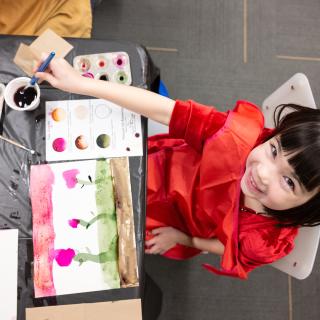
Family & Community
From hands-on workshops to lively celebrations, our Family & Community Programs invite children of all ages—and their grown-ups—to discover the city’s stories together.
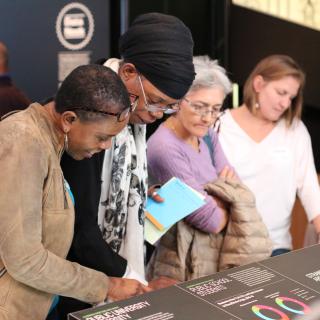
Educators
Learn about our online resources, professional learning workshops, and student field trips.
Stories
Dive deep into New York City's stories with our archive of essays, blog posts, and reflections on the Museum's collections and exhibitions.

Events
Explore the calendar and join us for upcoming workshops, discussions, performances, and more.
Join Our Newsletter
Stay up to date with us! Sign up for our newsletter and select "Teacher & Student Programs.”
Supporters
The Frederick A.O. Schwarz Education Center is endowed by grants from The Thompson Family Foundation, the F.A.O. Schwarz Family Foundation, the William Randolph Hearst Endowment, the Institute of Museum and Library Sciences, and other generous donors.