About the Museum
Our Mission
The Museum of the City of New York explores the people, places, and ideas that shape New York’s iconic character. We invite New Yorkers and visitors alike to discover their place in the city’s evolving story.
Vision Statement
We foster civic pride through experiences that champion New York’s creativity, ambition, and resilience. We connect visitors of all backgrounds to the city’s past and present, inspiring people to participate in shaping the future of our city and our world.
Strategic Plan 2026–2034
The Museum of the City of New York celebrated its centennial in 2023. In the years leading up to this milestone, the Museum made significant investments in capital improvements, experimented with new exhibition formats, and tested innovative marketing and advertising strategies. Now, informed by data and insights from our two-year centennial program, MCNY stands at a pivotal moment as we prepare for our next 100 years—beginning with a strategic plan that articulates the Museum’s priorities for the next decade.
Land Acknowledgement
The Museum of the City of New York is situated in the center of the New York metropolitan area, traditionally the lands of the Lenape, Manahatin, Canarsie, Shinnecock, Munsee, Mattinecock, Setauket, Unkechaug, Montauket, and others, all of whom have descendants living today. Native communities across the Americas have demonstrated resilience and resistance in the face of violent efforts to separate them from their land, culture, and each other. We offer recognition and respect to the Indigenous inhabitants of this land. New York City has always been and continues to be a place for gathering and exchange for Indigenous peoples, many of whom choose to call this city home.
Our History
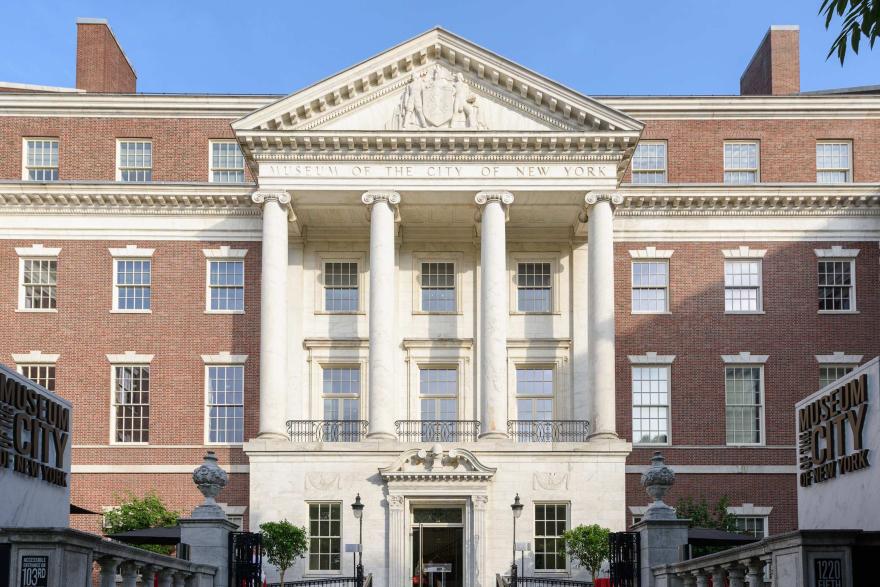
The Museum of the City of New York was founded in 1923 by Henry Collins Brown, a Scottish-born writer with a vision for a populist approach to the city. The Museum was originally housed in Gracie Mansion, the future residence of the Mayor of New York. Hardinge Scholle succeeded Henry Brown in 1926 and began planning a new home for the Museum. The City offered land on Fifth Avenue on 103rd-104th Streets and construction for Joseph H. Freedlander’s Georgian Colonial-Revival design for the building started in 1929 and was completed in 1932. During the next few decades, the Museum amassed a considerable collection of exceptional items, including several of Eugene O’Neill’s handwritten manuscripts, a complete room of Duncan Phyfe furniture, 412 glass negatives taken by Jacob Riis and donated by his son, a man’s suit worn to George Washington’s Inaugural Ball, and the Carrie Walter Stettheimer dollhouse, which contains a miniature work by Marcel Duchamp. Today the Museum’s collection contains approximately 750,000 objects, including prints, photographs, decorative arts, costumes, paintings, sculpture, toys, and theatrical memorabilia.